
Ibrahim Mahama Brings The Harvest Season to Parish
Fondation Cartier, Paris, 22 October 2026 to 28 February 2027
Paris has a new reason to look to Ghana this winter. Until 28 February 2027, the Fondation Cartier pour l’art contemporain has given its new Palais-Royal building to Ibrahim Mahama, the Ghanaian artist who turns collected, discarded and inherited materials into monumental installations. The Harvest Season (Le Temps des récoltes in French) is his first major exhibition in Paris, and the foundation describes it as being on a scale he has never attempted in France.
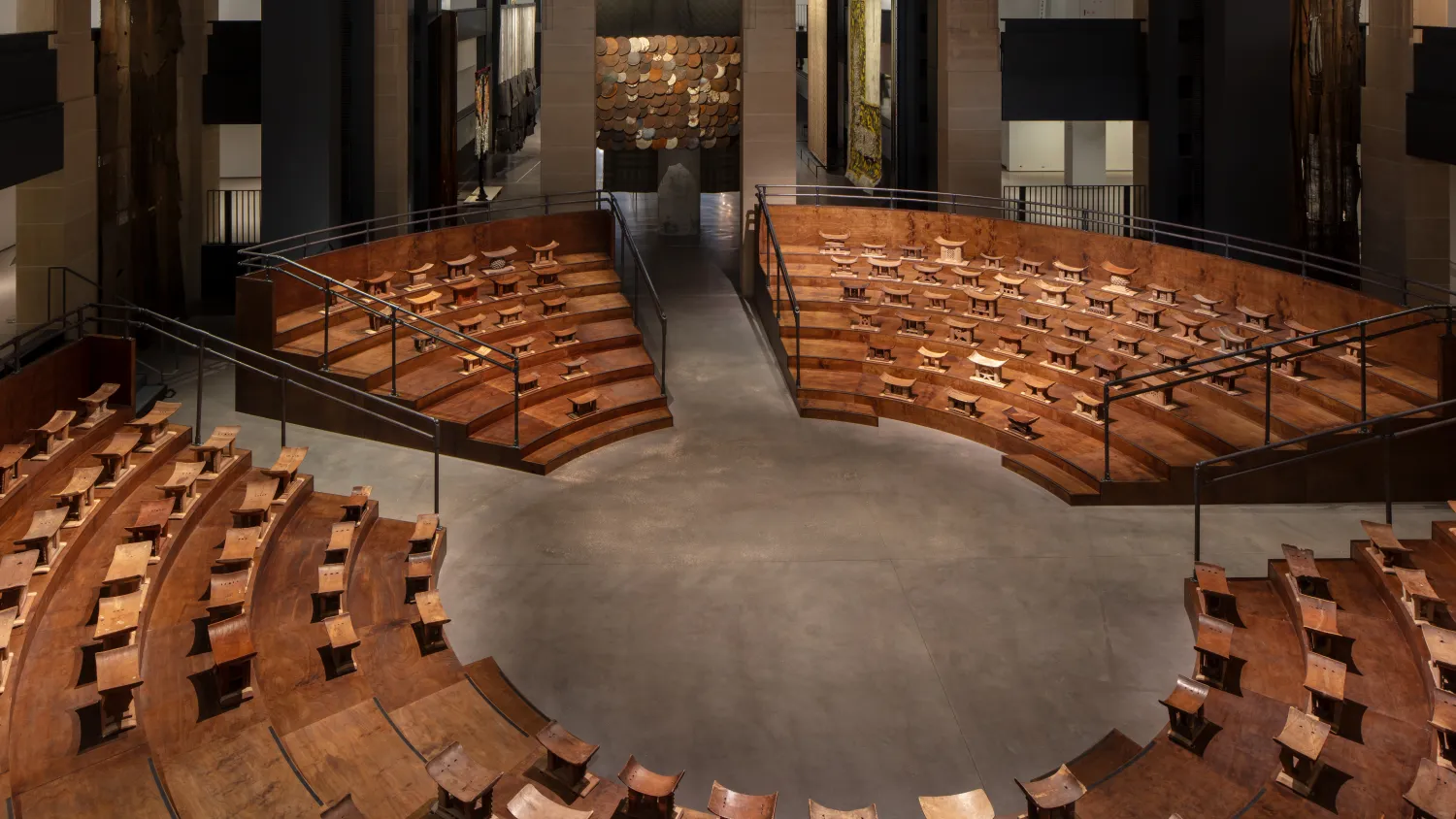
View of the exhibition Ibrahim Mahama, The Time of Harvests, Fondation Cartier pour l’art contemporain, 2026. Ibrahim Mahama, Parliament of Ghosts, 2026 © Ibrahim Mahama. Photo © Benoît Fougeirol
Mahama was born in Tamale in 1987. Since the 2010s his work has looked at Ghana’s colonial and postcolonial legacies through archives, industrial remains and everyday objects. He pays close attention to how goods travel, how craft skills are handed down, and how infrastructure carries traces of the past.
What sets this show apart is that it is not a solo exhibition in the usual sense. Mahama has invited nine artists and collectives, all linked to him through collaboration, research or exchange: Dorothy Akpene Amenuke, Gideon Appah, James Barnor, the Congolese plantation workers’ collective CATPC, Courage Dzidula Kpodo, Zohra Opoku, Postbox Ghana, Tjaša Rener and Feda Wardak. Together they fill the whole building with new site-specific works and fresh versions of some of his best-known installations.
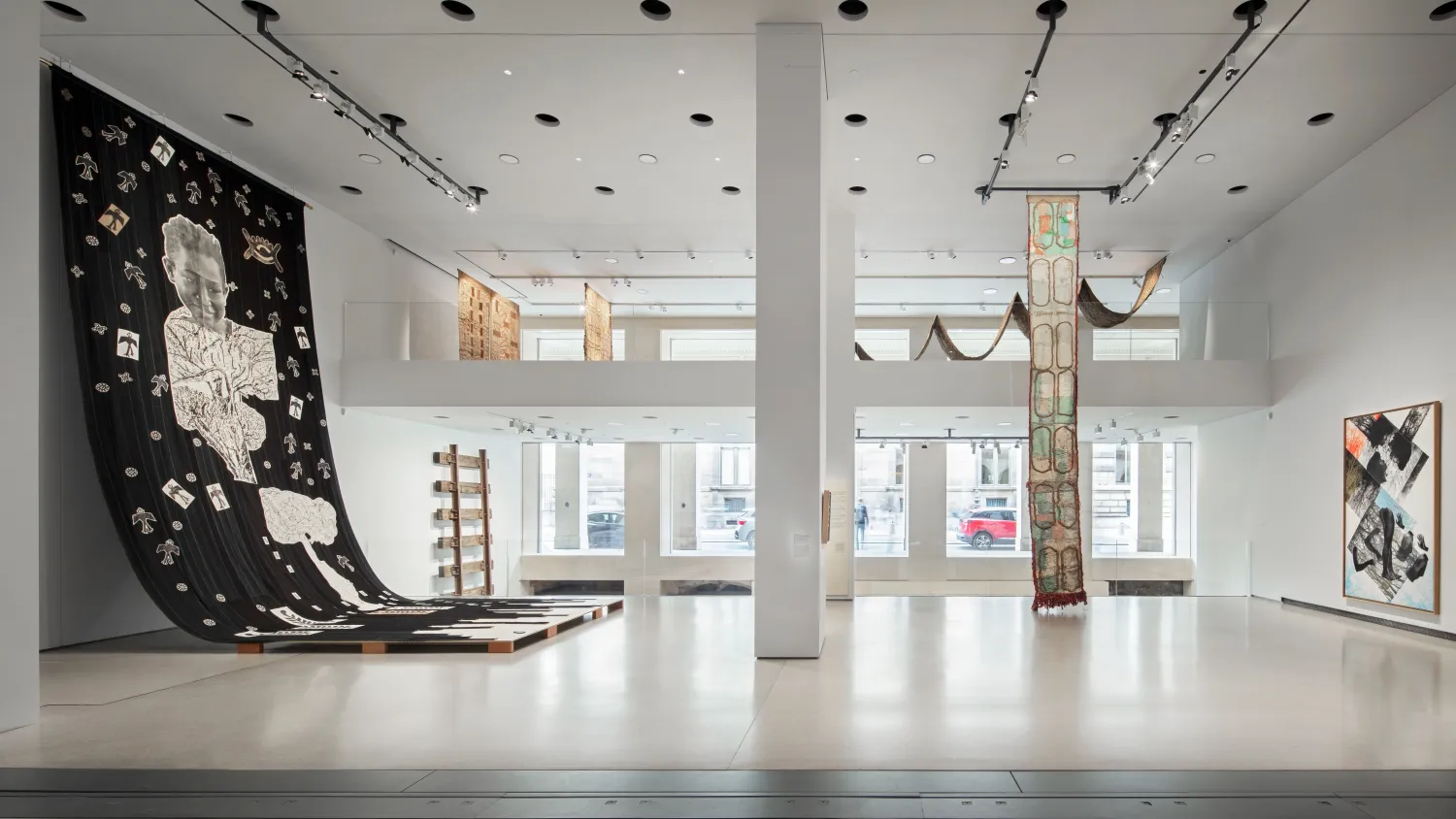
Exhibition view of “Ibrahim Mahama. The Time of Harvest” © Benoît Fougeirol
The title points back to the three art centres Mahama has founded in Tamale since 2019. These are places for making and teaching, rooted in their local setting, and the Paris show is conceived as a living organism that echoes them. They also belong to a wider network of independent African institutions, including doual’art in Douala, the Centre for Contemporary Art Lagos, RAW Material Company in Dakar and the Nairobi Contemporary Art Institute, each of which has built its own sustainable model.
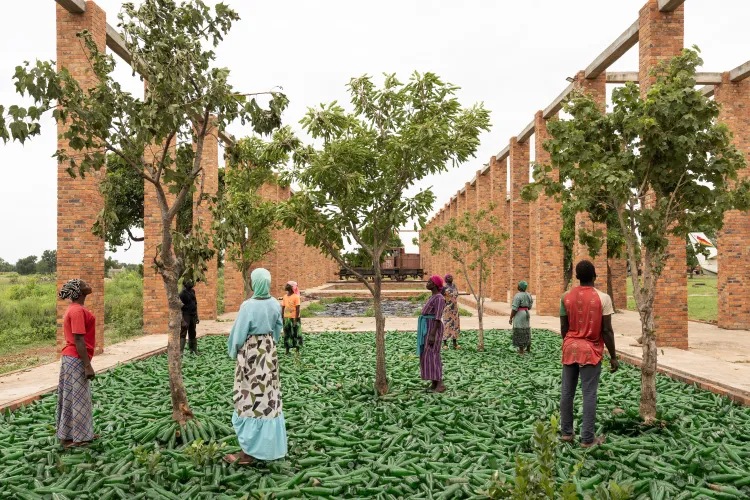
Red Clay, Tamale, 2025
The collaborators bring very different perspectives. James Barnor, born in 1929, documented Ghana around independence from his Ever Young studio in Accra. He shows vintage prints and albums, along with Polaroids made with Mahama in Tamale in 2024. Dorothy Akpene Amenuke, who taught Mahama at KNUST in Kumasi, works with jute on a monumental scale. Gideon Appah presents around thirty paintings built from Ghanaian advertising and press images of the 1950s to the 1980s, his largest showing in Europe so far. Postbox Ghana contributes about a hundred postcards and stamps of Tropical Modernist buildings.
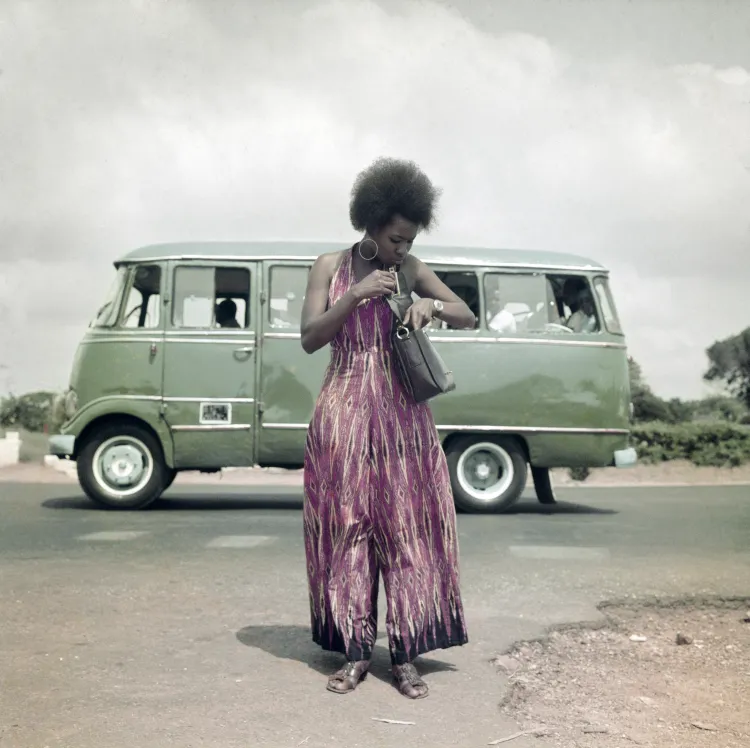
James Barnor, AGIP Calendar of 1974, 1973, Accra, chromogenic print
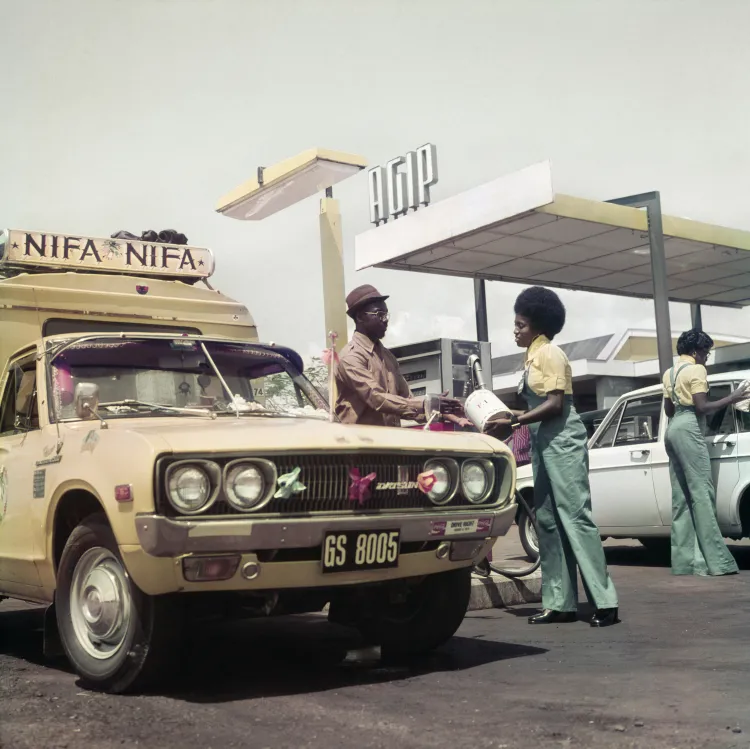
James Barnor, AGIP Calendar of 1974, 1973, Accra, chromogenic print, 44 × 44 cm © James Barnor, courtesy Galerie Clémentine de la Féronnière
The show also looks beyond Ghana. CATPC presents cocoa sculptures and embroideries on jute, Tjaša Rener explores Cold War ties between Nkrumah’s Ghana and Tito’s Yugoslavia, and Feda Wardak shares a film about water tunnels in eastern Afghanistan.
Underneath it all is a question about time. Mahama has said, “It is in the past that we can excavate the potential of the future.” The exhibition returns to the political and cultural hopes of African independence in the 1950s and 1960s and asks what unrealised futures might be reactivated today.
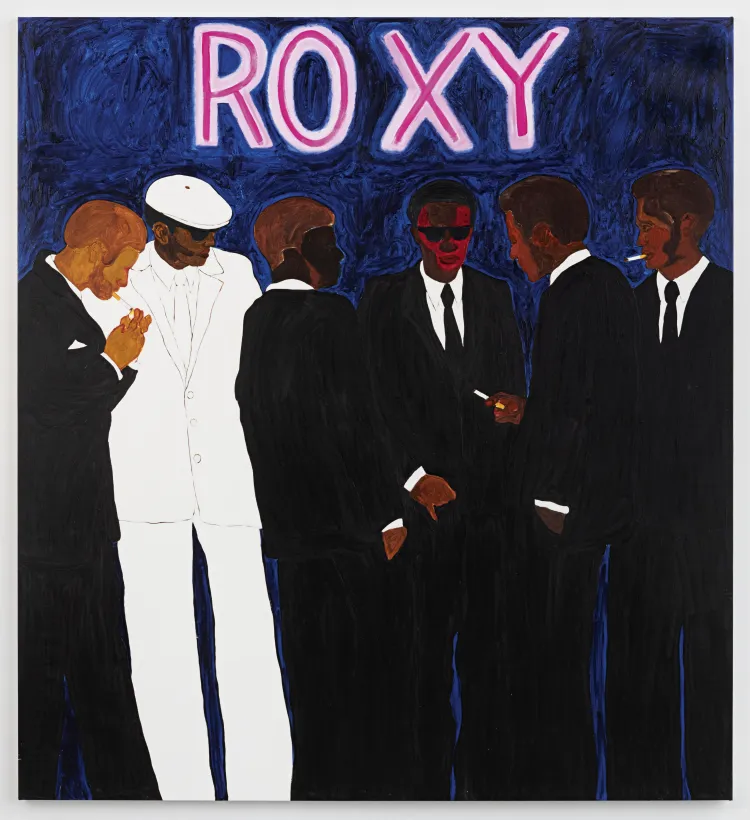
Gideon Appah, Roxy 2, 2020-2021, oil and acrylic on canvas, 218 × 198 cm. Courtesy of the artist and Mitchell-Innes & Nash, New York
Visit: Fondation Cartier, 2 place du Palais-Royal, Paris, 22 October 2026 to 28 February 2027. Check the foundation’s website for ticketing.
Sources:
- Exhibition page: https://www.fondationcartier.com/en/program/exhibition/the-harvest-season
- Press page (press release and image requests): https://www.fondationcartier.com/en/press
- Credits: key visual “© Ibrahim Mahama”; Parliament of Ghosts, 2025, “© Ibrahim Mahama. Photo © Ernest Sackitey, courtesy Red Clay.”