
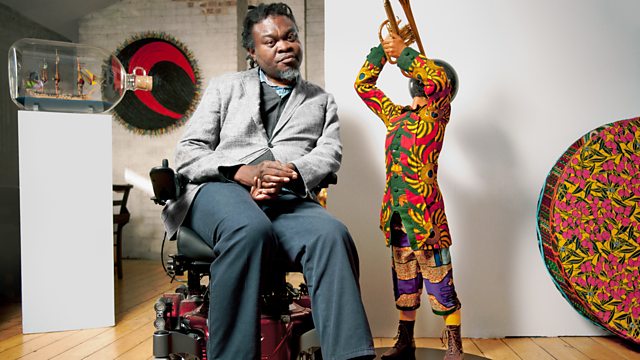
Yinka Shonibare CBE, RA: The Post-Colonial Dandy
Yinka Shonibare was born in London in 1962 but moved to Lagos, Nigeria, at the age of three. Returning to the United Kingdom to study art in the 1980s, he was famously asked by a tutor why he wasn’t making “authentic African art.” This question sparked a lifelong obsession with the concept of authenticity. Shonibare discovered “Dutch Wax” batik fabric—a material that is often associated with African identity but was actually inspired by Indonesian design, manufactured in Holland, and sold to the African market.
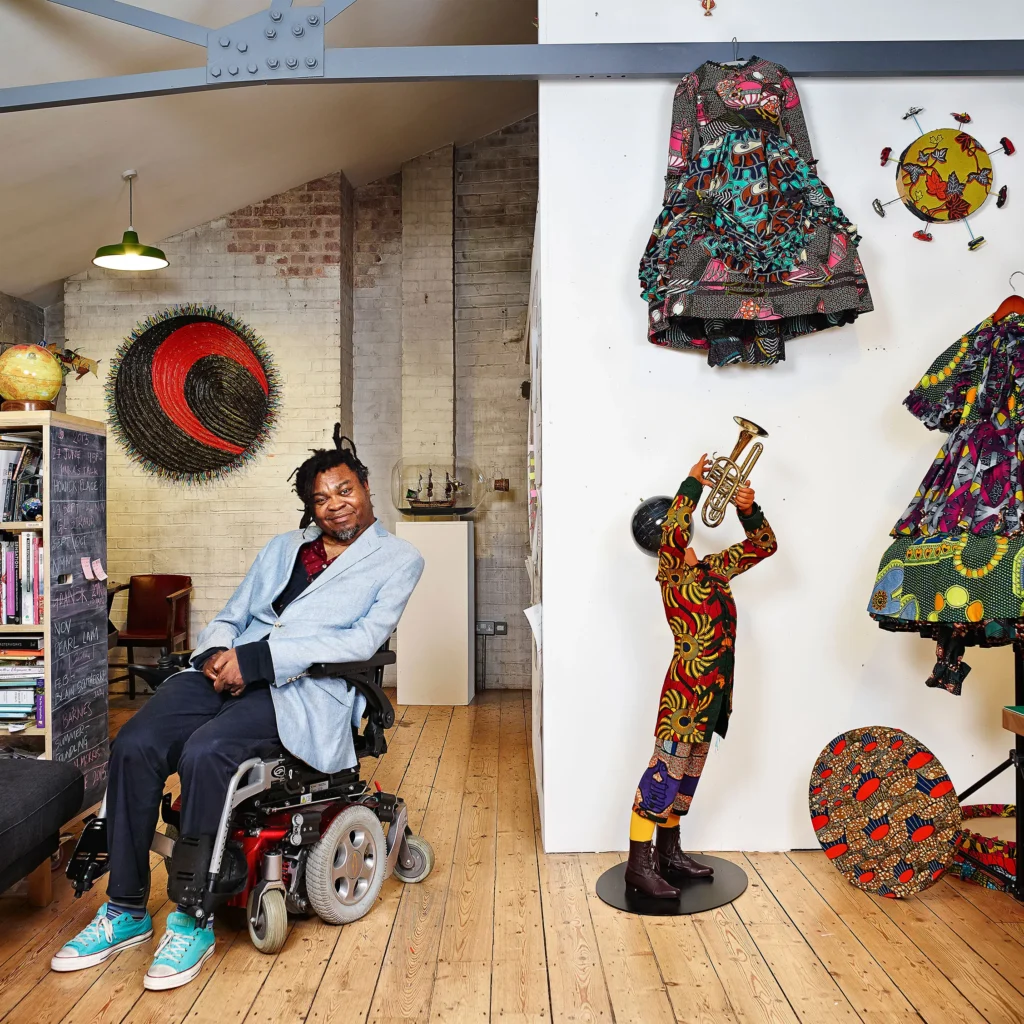
He uses this fabric to clothe headless mannequins in the style of 18th and 19th-century European aristocrats. By placing “African” fabrics on “European” silhouettes, he mocks the rigidity of racial and class boundaries. Shonibare, who contracted transverse myelitis as a young man and uses a wheelchair, often refers to himself as a “Post-Colonial Dandy”—someone who occupies the space of the establishment while simultaneously critiquing its foundations.
The Impact: Shonibare is a cornerstone of the British art establishment, having been awarded a CBE and elected to the Royal Academy. His masterpiece, Nelson’s Ship in a Bottle, which occupied the Fourth Plinth in Trafalgar Square, forced a national conversation in the United Kingdom about the naval history that built the British Empire. He proves that one can be deeply subversive while being celebrated by the very institutions they critique.
Leave a Reply