
Sir El Anatsui: The Alchemist of the Everyday
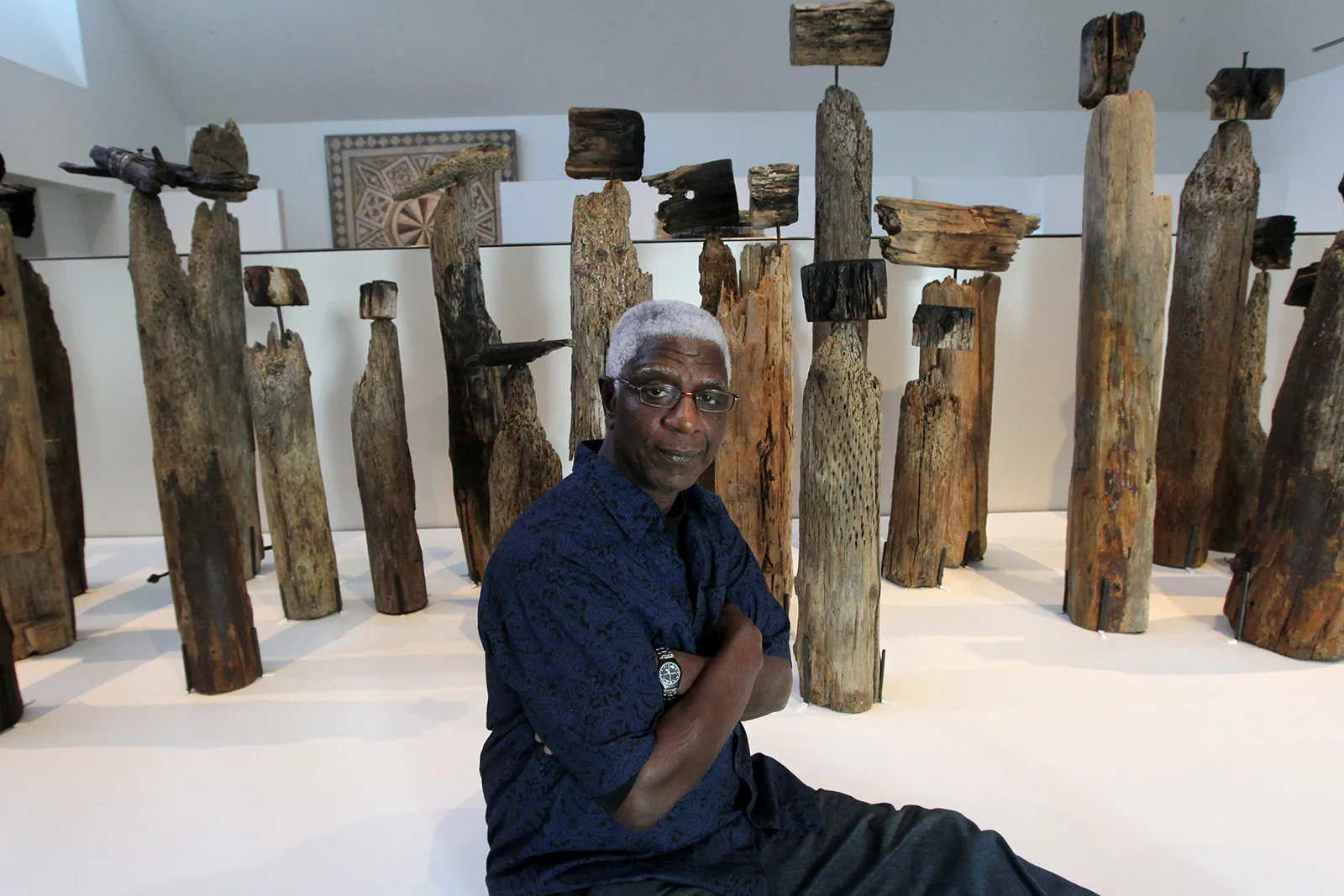
Born in 1944 in Anyako, Ghana, during the final decade of British colonial rule, El Anatsui journey began with a curiosity about the objects discarded by society. He was trained in a Western-style art curriculum at the University of Science and Technology in Kumasi, but he soon felt a disconnect between his training and his heritage. This led him to explore “Uli” and “Nsibidi” symbols, moving away from traditional canvas toward wood-carving and clay.
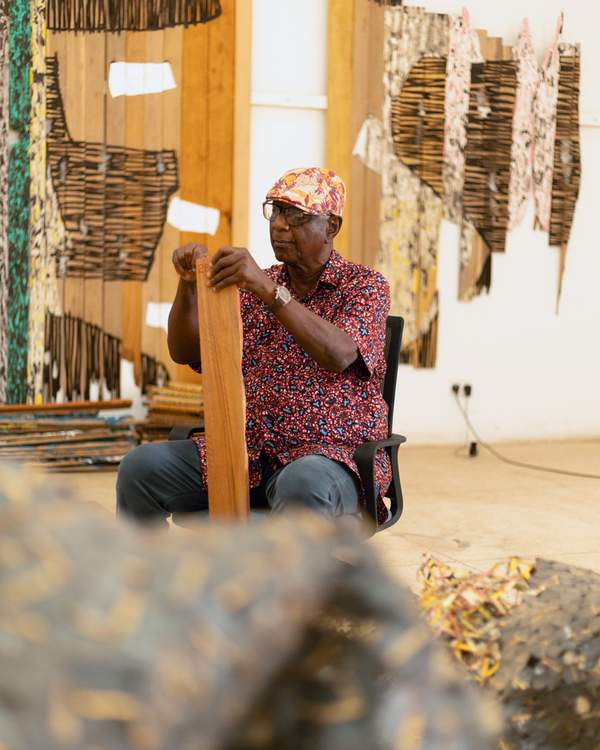
The turning point in his career came in the late 1990s when he discovered a bag of discarded liquor bottle tops in Nsukka, Nigeria. He saw in these scraps a metaphor for the history of Africa: liquor was one of the primary commodities traded by Europeans for African slaves. By flattening these caps and stitching them together with copper wire, he created “fabrics” that possessed the weight of sculpture but the fluidity of cloth. These works are intentionally “non-fixed”—he insists that curators hang them according to their own sensibilities, mirroring the ever-shifting nature of human history and the African Diaspora.
The Impact: Anatsui’s work has fundamentally altered the global perception of “African Art.” By using trash to create shimmering, gold-like tapestries, he performs an act of aesthetic healing. His presence in major institutions, from the Tate Modern in the United Kingdom to the Met in New York, serves as a reminder that the most profound beauty can be salvaged from the scars of colonial trade.
Leave a Reply